Joined
Jun 24, 2026
Messages
5
Reaction score
62

How to Earn Money Through Flippa: A Beginner's Guide​

Flippa has become one of the most popular marketplaces for buying and selling digital assets. People use it to trade websites, domain names, eCommerce stores, SaaS businesses, mobile apps, and other online businesses. While some sellers make substantial profits, success usually comes from research, patience, and improving the value of digital assets not from quick flips.

If you're wondering how people actually make money on Flippa, here are some of the most common methods.
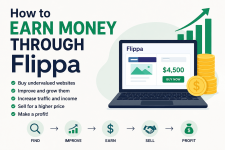
1783334090489.png

1. Buy Undervalued Websites and Sell Them for a Profit​

One of the most popular strategies is website flipping.

The idea is simple: find a website that's undervalued, improve it, and sell it later for a higher price.

Some common improvements include:

  • Updating outdated content.
  • Improving SEO to increase organic traffic.
  • Increasing affiliate or ad revenue.
  • Speeding up the website.
  • Redesigning the layout for a better user experience.
  • Fixing technical issues and broken links.
Even a small increase in monthly revenue can significantly increase the website's selling price.


2. Build a Website from Scratch​

Many Flippa sellers don't buy websites—they create them.

This usually involves:

  • Choosing a niche with good demand.
  • Publishing useful content consistently.
  • Growing traffic through SEO or social media.
  • Monetizing with ads, affiliate marketing, or digital products.
Once the site has stable traffic and earnings, it can often be sold for a multiple of its monthly profit.


3. Flip Domain Names​

Domain investing is another way people earn money on Flippa.

Investors buy domains they believe will become valuable and later sell them to businesses or entrepreneurs.

Good domains are usually:

  • Short and memorable.
  • Easy to spell.
  • Brandable.
  • Relevant to growing industries.
Not every domain sells quickly, so patience is important.


4. Improve Existing Online Businesses​

Some buyers purchase websites that already generate income but have obvious room for improvement.

For example:

  • Expanding product listings.
  • Improving conversion rates.
  • Adding email marketing.
  • Optimizing SEO.
  • Introducing new monetization methods.
After increasing profits, they list the business for sale again.


5. Buy Starter Websites​

Many beginner websites have potential but haven't been developed.

Some buyers purchase these low-cost sites and spend several months adding content, building backlinks, and growing traffic before selling them.

This approach usually requires more time than money.


6. Sell Digital Assets​

Besides websites, Flippa also allows users to sell:

  • Mobile apps
  • SaaS businesses
  • Chrome extensions
  • Amazon FBA businesses
  • Shopify stores
  • Digital products
If you've built a profitable digital business, Flippa can connect you with potential buyers worldwide.


7. Increase Website Revenue Before Selling​

Instead of selling immediately, many experienced sellers focus on increasing monthly income first.

Common monetization methods include:

  • Display advertising
  • Affiliate marketing
  • Sponsored content
  • Selling digital downloads
  • Membership subscriptions
  • Lead generation
  • Selling online courses
Higher recurring revenue generally leads to a higher selling price.


Tips Before Buying a Website​

Always do your research before purchasing any digital asset.

Check things like:

  • Traffic sources.
  • Google Analytics access.
  • Profit and loss reports.
  • SEO rankings.
  • Backlink quality.
  • Domain history.
  • Content originality.
  • Growth trends over several months.
If the seller isn't willing to verify traffic or earnings, treat that as a warning sign.


Common Mistakes Beginners Make​

Many newcomers lose money because they:

  • Buy based only on revenue.
  • Ignore declining traffic.
  • Overpay for websites.
  • Skip due diligence.
  • Expect quick profits.
  • Believe unrealistic seller claims.
Taking time to verify the data can save a lot of money.


Is Flippa Worth It?​

Flippa can be a good way to earn money if you're willing to learn how digital businesses work. Some people treat it as a side hustle, while others build full-time businesses around buying, improving, and selling online assets.

However, it's not a guaranteed source of income. Success depends on choosing quality assets, improving their value, and understanding what buyers are looking for. Like any investment, there are risks, so start small, learn from each purchase, and avoid investing more than you can afford to lose.
 
I've bought and sold a few websites on Flippa over the past three years. I wouldn't say it's easy money, but there is definitely money to be made if you're patient. My first purchase was a small affiliate site that earned around $40 a month. I spent six months updating old articles, improving SEO, and fixing the design. By the time I sold it, the site was making about $180 a month, and I sold it for a little over $5,000. It wasn't life-changing money, but it proved the model works.
 
I think too many people treat Flippa like a stock market where they can buy today and sell next week. In reality, most successful flips take months. The buyers who make good profits usually improve the business before selling it again.
 
My first Flippa purchase was a complete disaster. The seller showed nice traffic screenshots, but after I bought the website, the traffic dropped almost immediately. Later I realized most of the visitors were coming from paid ads instead of organic search. Since then, I always ask for Google Analytics access before making an offer.
 
If you're just getting started, don't spend thousands of dollars on your first website. Buy something small so mistakes don't become expensive lessons. My first site cost less than $300, and I'm glad I started that way.
 
I actually enjoy building websites more than buying them. I create niche blogs, grow them for about a year, and then list them on Flippa. It's slower, but I feel more confident selling something I've built myself.
 
One thing I've noticed is that websites with stable traffic usually attract more serious buyers. Even if the income isn't huge, buyers like consistency more than sudden spikes.
 
I made my first profit by improving an old WordPress blog. The content was good, but the website looked outdated. After redesigning it and optimizing the pages, I sold it for almost double what I paid.
 
I wouldn't rely on Flippa as my only source of income. Some months you'll find great opportunities, and other months there isn't much worth buying. I see it as one part of my online business.
 
Due diligence is everything. I spend more time researching a website than negotiating the price. A few hours of research can save thousands of dollars.
 
The biggest mistake I made was falling in love with a website. I ignored warning signs because I really wanted to own it. Now if something doesn't feel right, I simply move on to another listing.
 
I've had more success with content websites than eCommerce stores. They're easier for me to understand, and I enjoy working on SEO more than managing products and inventory.
 
One thing beginners often overlook is the amount of work required after buying a website. You're not buying passive income—you're buying a project that still needs attention.
 
I usually check the backlink profile before looking at revenue. If the backlinks are poor quality, there's a good chance future traffic will decline.
 
My best flip happened almost by accident. I bought a neglected travel blog because I liked the niche. After updating around 40 articles and improving page speed, traffic nearly doubled over the next eight months. That turned into my most profitable sale.
 
I think patience is probably the biggest advantage you can have. Many buyers expect immediate returns, but websites usually need time before they become more valuable.
 
I only buy websites in industries I understand. If I don't know how the business makes money, I won't invest. That rule has saved me from several bad purchases.
 
One lesson I learned is to never trust screenshots alone. Always ask for verification. Most genuine sellers won't have a problem sharing analytics or revenue reports.
 
The first website I sold made me more excited than the money itself. Seeing someone willing to pay for something I had improved gave me confidence to keep going.
 
Flippa has become more competitive than it was a few years ago, but there are still opportunities if you're willing to put in the work. The easy bargains don't appear as often anymore.
 
Back
Top